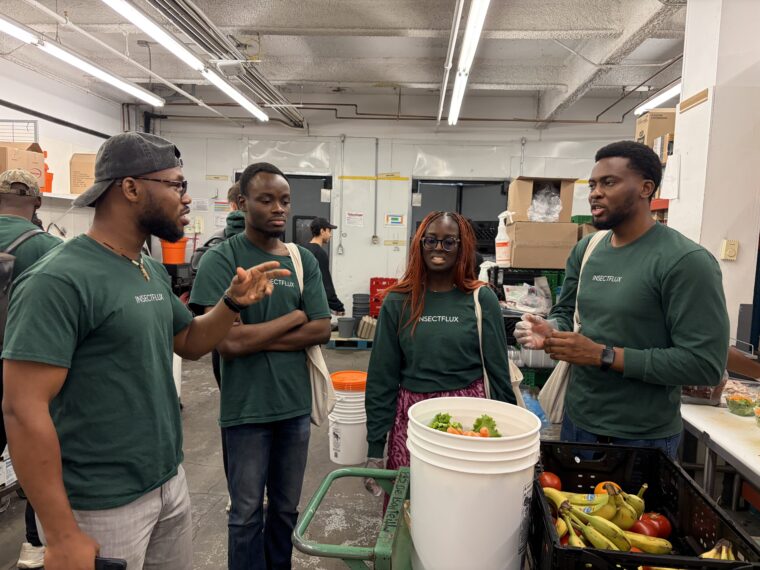
A group of young entrepreneurs from Ghana recently joined Insectflux in Montréal for an immersive learning experience focused on food waste reduction and circular economy innovation. As part of a visit organized through the Nkabom Collaborative, McGill University’s agrifood initiative in partnership with the Mastercard Foundation, the delegation had the opportunity to see firsthand how innovative business models can address global sustainability challenges.
During the visit, participants accompanied the Insectflux team on a real-world food recovery mission, collecting surplus fruits and vegetables from partner businesses and tracking the materials through Insectflux’s data platform. The recovered food was then redirected to organizations that could put it to productive use, demonstrating how circular economy principles can reduce waste while creating value across the food system.
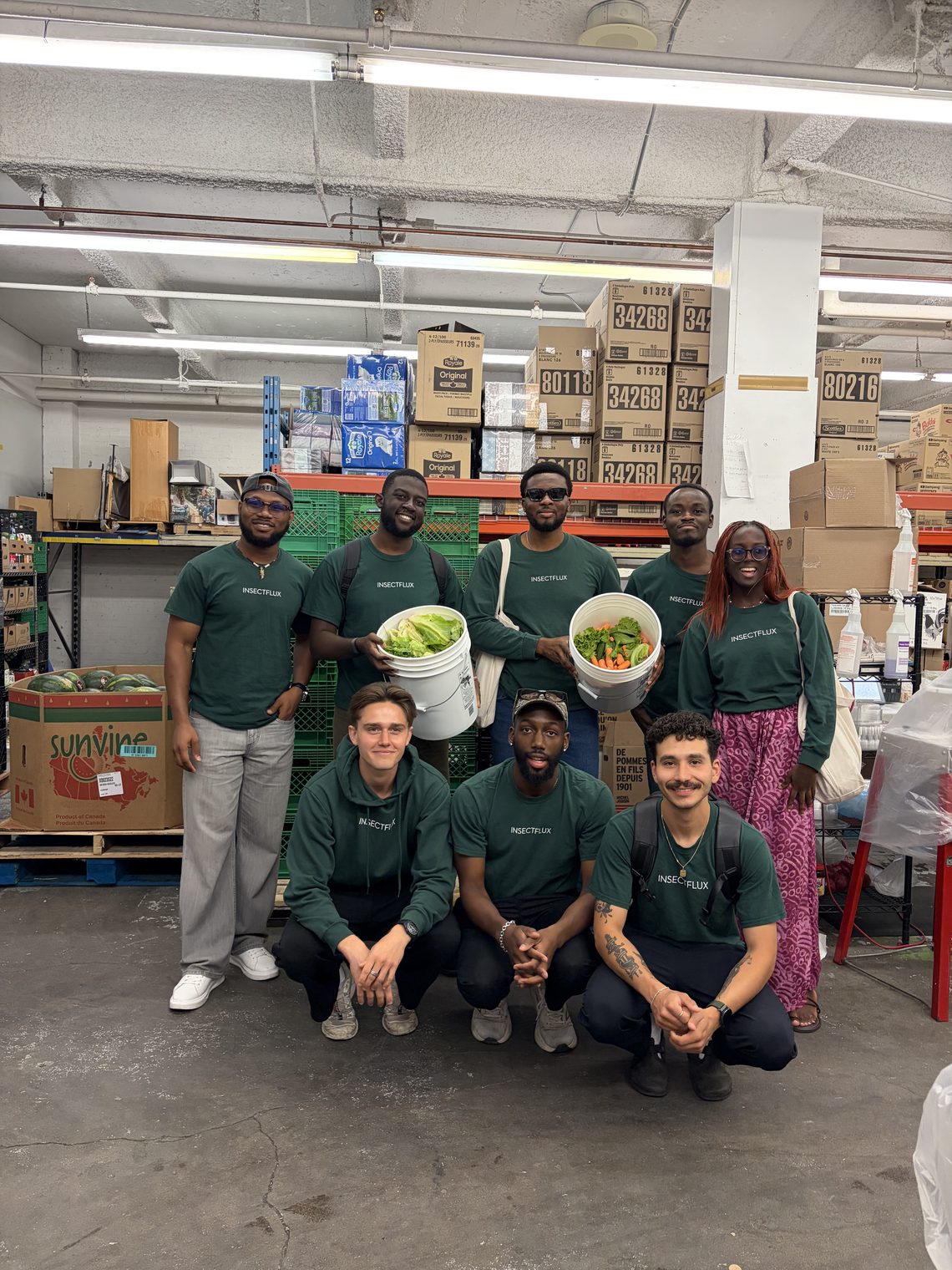
The experience highlighted the shared challenges and opportunities facing food systems in Canada and Ghana. By engaging directly with Insectflux’s operations, participants explored how systems thinking and innovative approaches to waste management can be adapted to different contexts and communities.
Members of the delegation praised the initiative for its practical application of sustainability and its potential relevance to their work back home. Their reflections underscored the value of knowledge exchange and international collaboration in advancing solutions to global food security and environmental challenges.
The visit reflects the Nkabom Collaborative’s commitment to connecting young African entrepreneurs with innovative organizations and ideas that can inspire new approaches to agrifood development. By building bridges between Canada and Africa, such exchanges help foster entrepreneurship, strengthen innovation ecosystems, and empower the next generation of leaders working to create more sustainable food systems.

Ashesi University
Ashesi University Foundation was founded by Dr. Patrick Awuah, and spearheaded by a well-qualified Board of Trustees whose efforts are complemented by Advisory Boards located in the US and Ghana. In 2002, Ashesi University officially launched its liberal-arts style of higher education as a private, not-for-profit, non-sectarian institution fitting to Africa’s context and enrolled its […]

McGill University
McGill University is a world-renowned public institution of higher learning based in Montréal, Québec, Canada. Since opening its doors in 1821, McGill has stayed true to its mission: advancing learning, creating and sharing knowledge, and making a meaningful difference in society. With a strong commitment to academic excellence, McGill offers a wide range of undergraduate […]