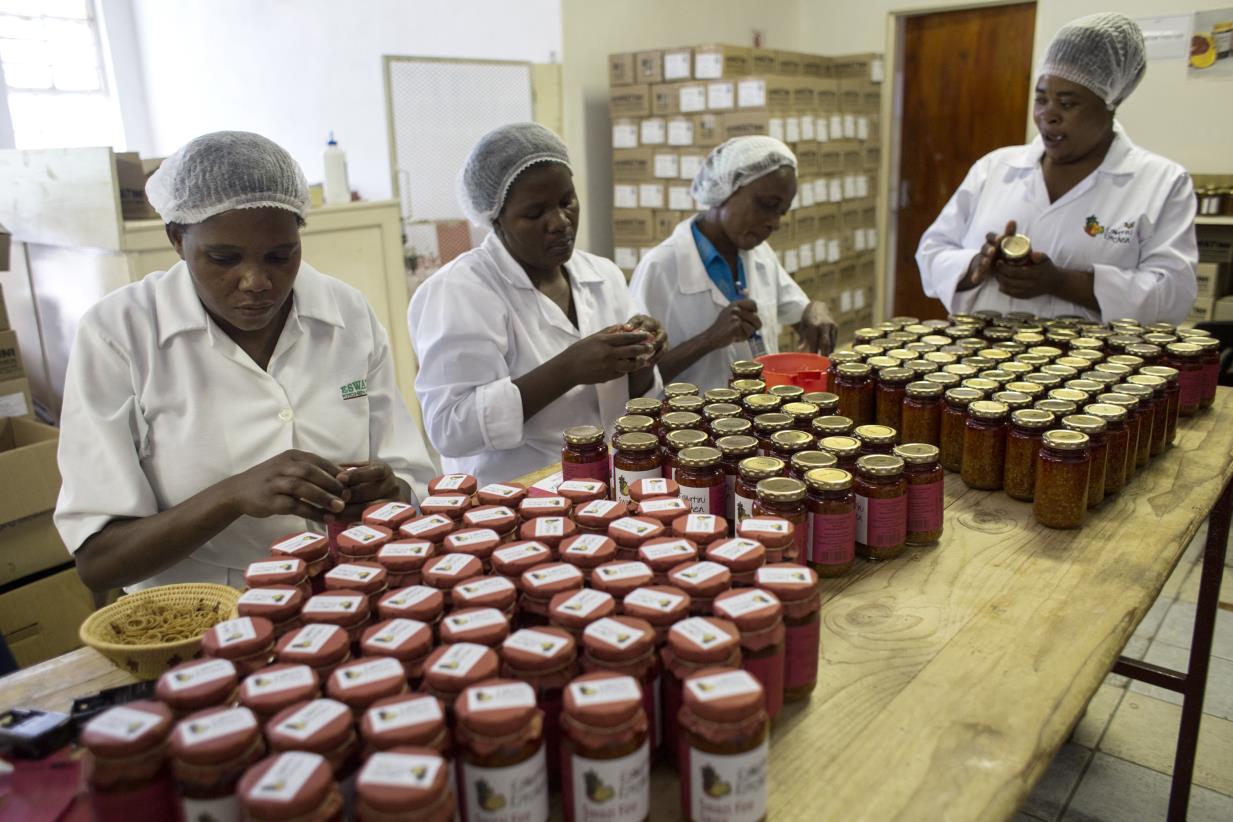
Seventeen young people (16 young women and one young man) are enrolled in the Diploma program. Students have learned about food system innovation and conceptualized, developed, and showcased new food products with the guidance of lecturers and laboratory technicians of the Department of Food and Postharvest Technology during their practical examination sessions.
The Diploma in New Food Product Development is a two-year diploma program that aims to equip learners with practical and creative skills to design, develop, and commercialize innovative food products, foster entrepreneurial thinking and technical competence in food formulation, sensory evaluation, and market analysis, support Ghana’s agro-processing and food innovation sectors by producing graduates capable of driving value addition, food safety, and consumer-focused product development, and promote inclusive, hands-on education that empowers youth and marginalized groups to participate in the national food economy.
Graduates of the programme will be able to:
- Apply food science principles to develop safe, nutritious, and acceptable food products.
- Generate and prototype novel food concepts tailored to market and cultural needs.
- Operate lab- and pilot-scale equipment for formulation, testing, and packaging.
- Develop business plans and branding strategies for new food products.
- Implement food safety standards and conduct basic toxicological risk assessments.
- Present product ideas clearly and work effectively in multidisciplinary teams.
- Integrate indigenous ingredients and sustainable practices into product development.
Partner Institution
Koforidua

Koforidua Technical University
Koforidua Technical University (KTU) is a leading public technical institution located in the Eastern Region of Ghana. Established in 1997 as Koforidua Polytechnic and later converted to a technical university under the Technical Universities Act, KTU has grown into a hub of innovation, applied research, and industry-focused education. Guided by its motto “Innovating for Development,” […]
Meet the Team

Program Manager


M& E Lead

Education Pillar Lead

Communications & Networking Lead

Access and Success Pillar Lead

Entrepreneurship Pillar Lead

Finance Lead

Program Lead