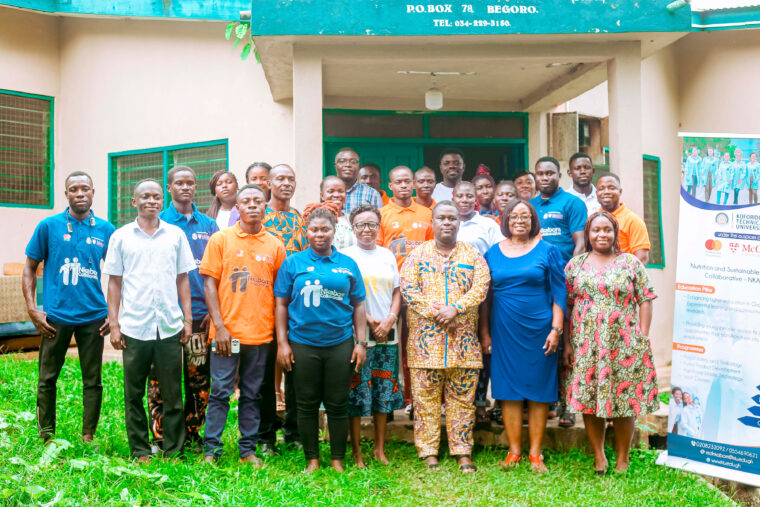
Twenty-two young, energetic, and enthusiastic vegetable farmers from the Fanteakwa North District of the Eastern Region of Ghana took part in a five-day short course on Good Agricultural Practices. They tested soil and water and learned about responsible pesticide use and food safety. They were guided through farm soil and water testing, responsible pesticide use, food safety, appropriate postharvest handling practices, and workplace hazard management.
At the Begoro periodic market, the lessons moved beyond the training field. The vegetable farmers interacted with traders, sharing food safety knowledge from the five-day course on signs of pesticide residue in tomatoes and cabbage. The market-day engagement was a practical step taken by the farmers (17 young men and 5 young women), drawn from various communities in the Fanteakwa North District, towards implementing GAP.
Organized by the Nkabom Collaborative at KTU, the Good Agricultural Practices (GAP) short course focused on skills farmers can use to support safer and more responsible crop production.
Pesticide residues in vegetables have drawn public attention in Ghana. A report on a Ghana Standards Authority study described high levels of pesticide residue in cabbage sold in two major markets in Accra. The samples failed to meet safety standards, posing a threat to consumer health. Although the study did not establish pesticide residue levels in the crops produced by the course participants, it underlined why safe pesticide use and food safety awareness matter across the food chain.
During the course, farmers also learned about soil management, integrated pest management, food safety culture, consumer awareness, and managing food safety in the crop production business, among others. Field sessions allowed them to examine conditions that affect production. With Mr. John Kwaku Avege, the district’s Crops Officer for the Department of Agriculture, as a facilitator, the young farmers examined soil health, including pH and fertility, observed signs of microorganism activity, and assessed the suitability of water used for crop production.
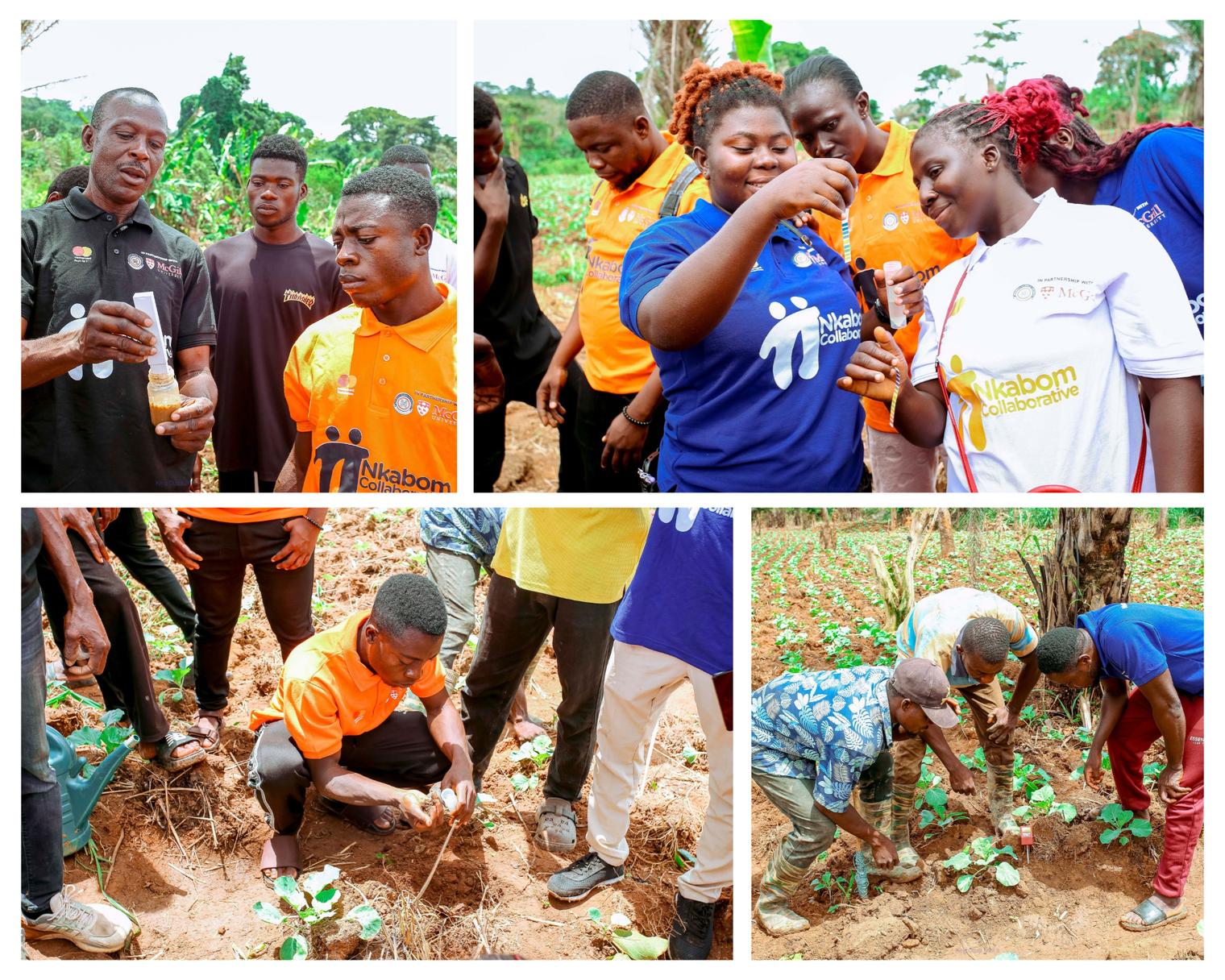
Participants also learned about the appropriate application of legal pesticides and integrated pest management. Ms. Jackline Boateng of the Food Research Institute facilitated sessions on consumer awareness and food safety culture, managing food safety in the crop production business, safe harvesting, postharvest handling, and harvest intervals.
For Evans, the lessons brought the risks of inappropriate pesticide practices into sharper focus. “Now that we have gotten to know the adverse effects of wrong pesticide use, I promise to stay away from bad farming practices we are used to and practice more organic farming,” he said. Two young female participants, Sarah and Jenifer, expressed their appreciation to the team for coming to their doorstep to train them. Farmers carried out part of the activities at the Begoro market during the weekly market day, where they taught traders signs that indicate pesticide residue in tomatoes and cabbage. It was a complete awareness activity, showing a strong intention to engage in good agricultural practices.

The course gave participants practical experience in assessing soil and water, managing pests and pesticides more responsibly, and considering safety from production through harvest and handling. Their next step is to apply those skills in their own farming activity.

Koforidua Technical University
Koforidua Technical University (KTU) is a leading public technical institution located in the Eastern Region of Ghana. Established in 1997 as Koforidua Polytechnic and later converted to a technical university under the Technical Universities Act, KTU has grown into a hub of innovation, applied research, and industry-focused education. Guided by its motto “Innovating for Development,” […]