Kwame Nkrumah University of Science and Technology (KNUST), located in Kumasi in Ghana’s Ashanti Region, is a premier public university and the country’s leading institution for science and technology education. It was originally established in 1951 as the Kumasi College of Technology and officially opened in 1952 with 200 teacher training students transferred from Achimota College. Over the following years, the university expanded rapidly with the introduction of key departments including Engineering and Commerce (1952), Pharmacy and Agriculture (1953), and Architecture and Town Planning (1957–58). These developments laid the foundation for KNUST’s transformation into a full university in 1961, focused on advancing technical, scientific, and professional education in Ghana.
With its evolution into a science and technology-focused institution, KNUST transferred its teacher training and commerce programs to other colleges to concentrate on its core mandate. Today, KNUST operates a collegiate system comprising six colleges: Engineering; Science; Agriculture and Natural Resources; Art and Built Environment; Health Sciences; and Humanities and Social Sciences. The university offers a wide range of undergraduate and postgraduate programs in fields such as engineering, medicine, pharmacy, architecture, law, business, and the arts.
KNUST is known for its strong emphasis on applied research, innovation, and entrepreneurship. It hosts several renowned research centers, including the Kumasi Centre for Collaborative Research and the Brew-Hammond Energy Centre, and maintains partnerships with both local and international institutions. With a vibrant student population of over 85,000 and a commitment to academic excellence, KNUST has earned top rankings nationally and internationally, including recognition as one of the best universities in West Africa.
Through its extensive academic offerings, state-of-the-art facilities, and commitment to industry-relevant training, KNUST plays a significant role in driving Ghana’s socio-economic development and remains at the forefront of higher education and research on the continent.
Related Programs

Short Course in Food Hygiene and Sanitation
This course is designed to equip participants with essential knowledge and practical skills to ensure food safety, improve service quality, and enhance employability in the food and hospitality sectors. Target Audience: Food Vendors & Caterers, Hospitality & Food Service Staff, Aspiring Food Entrepreneurs, Food Handlers in School Feeding Programs, Restaurants, Hotels & Small Food Processing […]

Meet the Team

Project Team

Project Team

Program Associate

Program Associate

Education Pillar Co-Lead

Communications Lead

Principal investigator

Finance Lead

Finance Lead

M & E Lead

Education Pillar Co-Lead

Entrepreneurship Pillar Lead

Program Associate

Deputy Principal Investigator & Access and success Pillar Lead

Program Manager

Networking Rep

Project Team
Latest News and Events
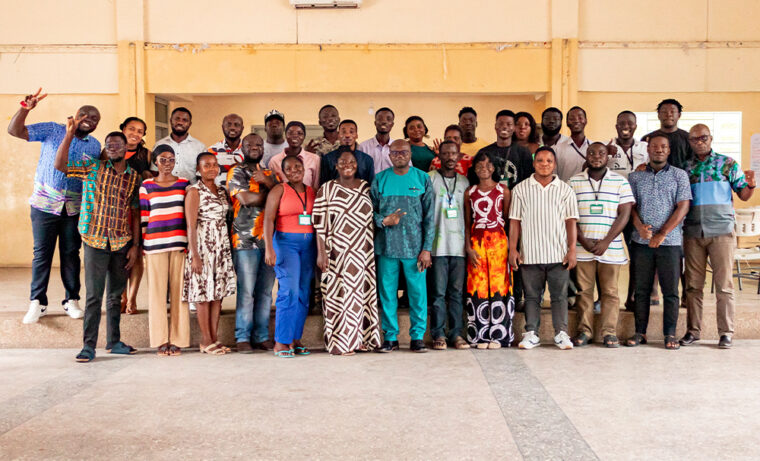
KNUST Launches Community-Based Entrepreneurship Training in Sekondi
29 Sep 2026
The KNUST Nutrition and Sustainable Agrifood Collaborative, in partnership with the Mastercard Foundation (Nkabom Collaborative) has launched its Community-Based Entrepreneurship Training (CBET) programme in Sekondi in the Western Region. The first cohort of the 10-day programme brought together 30 participants to equip them with practical intrapreneurship and entrepreneurship skills to develop, start and grow viable ventures […]
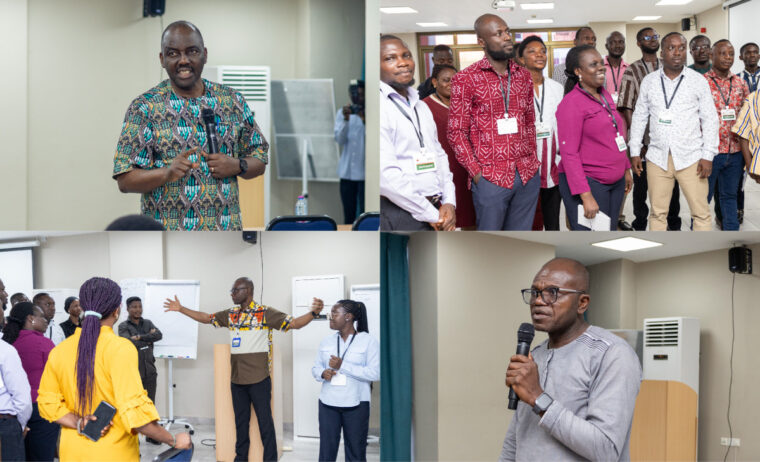
Nkabom Collaborative at KNUST launches second cohort of agribusiness trainers
3 Feb 2026
The Nutrition and Sustainable Agrifood Collaborative at Kwame Nkrumah University of Science and Technology, Kumasi (KNUST), in partnership with the Mastercard Foundation (Nkabom Collaborative), has begun training the second cohort of facilitators under its Entrepreneurship Empowerment (A2Es) Training of Tutors (ToT) programme. The intensive 10-day programme has brought together 30 facilitators from agricultural colleges across […]
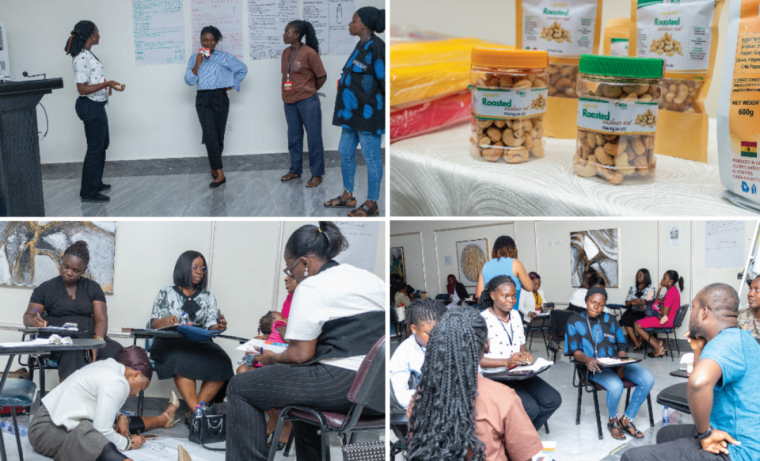
Nkabom Collaborative at KNUST Trains MSMEs in Business Plan Development
11 Dec 2025
The Nkabom Collaborative at KNUST, in partnership with the Mastercard Foundation, has commenced a five-day Business Development Training Programme aimed at strengthening the capacity of micro, small and medium enterprises (MSMEs) across Ghana. The training programme, which brought together 25 participants from across the country, seeks to equip existing and aspiring entrepreneurs with practical skills […]